
Policy Management: Replacing an Expired Policy Everywhere It Is Cited
When a policy is replaced, the old version may still be cited in dozens of answers, each one needing to be found and changed by hand. This article explains how to trace those dependencies and replace the policy without missing an answer.
By EA Team
Contents
- Why old citations survive
- Mapping the dependencies first
- Changing the answers in a controlled order
- How EA helps you find and replace the citations
- Handling answers where the new position differs
- Watching for answers already submitted
- Keeping the replacement visible to the team
- A practical replacement sequence
- Where this leaves your policy library
Your information-security policy is renewed in March. The new version tightens the wording on multi-factor authentication and changes the review date. The policy document itself takes an afternoon to update and approve. The harder job is the answers. Across the answer library, the old policy is cited in more than forty answers, in questionnaires for IT services clients, public-sector bids and two insurance proposals. Some of those answers quote the old wording, some refer to the old review date, and a few describe a control that the new policy changes.
If each answer is found and checked by hand, the job takes days, and a missed one is likely. Someone opens a questionnaire from last year, finds the old wording, and copies it into a new bid without checking it against the renewed policy.
This article sets out why old citations survive a policy change, how to map the answers that depend on a policy before you touch anything, and the order in which to change them. It also shows where EA keeps the link between an answer and the source behind it, so the replacement can be finished and not merely estimated.
Why old citations survive
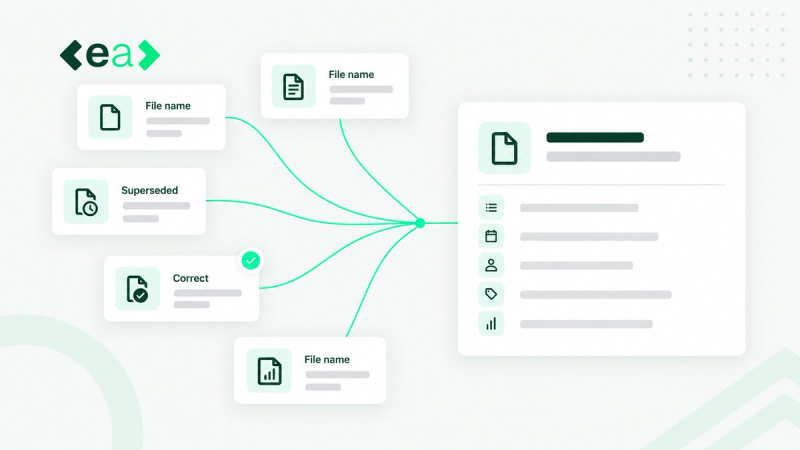
Answers are written at different times by different people. A sentence that cites a policy may have been copied from an earlier bid, edited for a new client and then saved in a shared library. Nothing in that process links the sentence back to the policy. When the policy changes, the link has to be rebuilt from memory or from search, and that is where answers are missed.
Search helps only if the team knows what to search for. A policy may be referred to by its title, by its code, by a short name used in a particular bid or by a description of the control. Each of those variations can hide a citation.
Mapping the dependencies first
Before changing anything, map where the policy is used. Search for the title, the code, the review date and the key phrases from the policy. Note every answer that cites it, and record whether the citation is a direct reference, a quotation or a paraphrase. Paraphrases are the most likely to be missed and the most likely to be wrong after the change.
Once the map exists, sort the answers into three groups. Some will need only the reference updated. Some will need the wording changed to match the new policy. A few may describe a control that has changed in substance, and those need a subject expert to confirm the new position before the answer is updated.
Changing the answers in a controlled order
Start with the policy itself. Confirm the new version is approved and the effective date is set, because every answer should point to the approved version. Then work through the answers in priority order: live bids first, then answers in the library that are likely to be reused, then archived material that will not be reused.
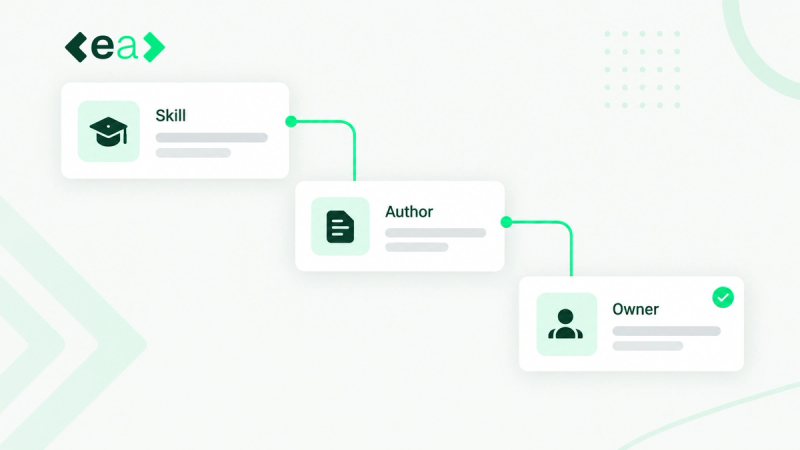
Keep the change recorded. Each updated answer should show the new version, the reviewer and the reason for the change. A short comment, such as "Updated to reflect the March policy, MFA wording revised", is enough to explain the change to the next person who reads it.
How EA helps you find and replace the citations
EA answers from approved documents and shows its sources, so an answer that relies on the policy carries that reference visibly. Autofill completes questionnaires from approved evidence with citations, which means new answers drawn from the renewed policy point to the new version. Answers carry statuses and version history, so the team can see which answers were updated, when, and by whom. Named reviewers and approvers can be assigned to the answers that need checking, which turns a long list into a set of owned tasks.
EA cannot decide what the new policy means for each answer, and it does not replace the judgement of the subject expert who confirms a changed control. What it changes is the search: the team can see which answers rely on the policy and does not have to hunt for them. For the broader question of keeping answer libraries current, our article on keeping EcoVadis evidence reviewed and recorded covers the review habit in more depth.
Reused evidence needs the same care. A policy often appears in more than one assessment, and a change to it should be reflected in each cycle where it was cited. Our article on how EcoVadis evidence history carries between assessments describes how to keep that trail clear, which helps when a replacement has to be explained to a buyer.
Handling answers where the new position differs
Some policy changes alter a control, and not a date or a phrase. If the renewed policy changes multi-factor authentication from optional to mandatory for a class of users, every answer that describes access control now needs a new statement, and the statement should match what the business actually does, as well as what the policy says. That check belongs with the subject expert, because it depends on how the change is implemented.
Record those answers as pending expert confirmation until the position is confirmed. A team that marks them clearly avoids submitting a new policy description on the strength of a paper change, and it gives the expert a short, bounded list to confirm.
Watching for answers already submitted
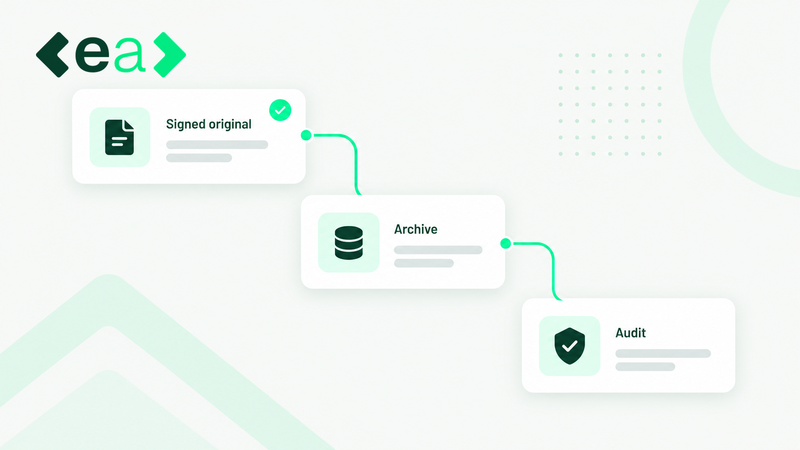
A replacement does not change what a buyer already received. If an old answer was submitted and the buyer may still be assessing the bid, consider whether the buyer needs to know that the policy has been replaced. That decision belongs to the bid lead and the relevant approver, and it should be made deliberately.
Keeping the replacement visible to the team
A replacement that happens quietly is a replacement that gets half done. Put the list of affected answers somewhere the bid team can see it, with the status of each one, so a coordinator drafting a new response can tell whether the answer they are about to reuse has been checked against the renewed policy.
That visibility matters most in the weeks after the change, when some answers have been updated and others have not. A team that can see the difference avoids the worst outcome: a new bid that mixes the new policy wording with an old answer that still describes the previous control.
A practical replacement sequence
Map every citation before you change anything, and record the list in one place. Confirm the new policy is approved and in force. Work through the answers in priority order, marking each as updated, pending expert confirmation or retired. Record the reason for each change beside the answer. Close the task only when every item on the list is accounted for.
Where this leaves your policy library
An expired policy is only the start of the job. The answers that cite it need to be found, checked and updated, and the team should be able to see that the work is complete. Mapping the dependencies first, changing the answers in a controlled order and recording each change keeps the library consistent. EA helps by showing which answers rely on each source, with statuses and version history, so the replacement is finished and not merely estimated.
Choose one policy that renews this year and search your answer library for every citation of it, including paraphrases. Record the count before you start. To see how answers link to their sources and how version history records each change, open a policy-linked answer in EA.
Filed under Compliance Knowledge & Evidence, 19 November 2026All posts