
Supporting Documents: Pointing Buyers to the Exact Section
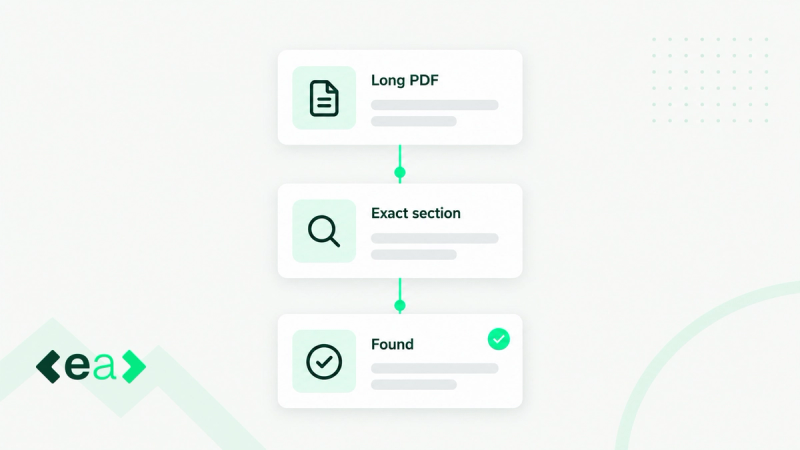
Sending a buyer a 100-page PDF and hoping they find the clause that answers their question is a poor experience for both sides. This article explains how to point buyers to the exact section, and why a precise reference builds confidence in the answer.
By EA Team
Contents
- Why whole documents slow buyers down
- Choosing the right level of reference
- How EA helps you cite the right source
- Keeping the pointer accurate
- Deciding how much of a document to point to
- When a whole document is the right answer
- Writing the pointer so a buyer can use it
- Practical habits for precise references
- Where this leaves your buyer experience
A corporate-finance team responds to a supplier questionnaire that asks how the company handles conflicts of interest in its supply chain. The answer is good, and it is backed by a 100-page governance handbook. The team attaches the handbook and writes "see the handbook for details". The buyer's reviewer opens it, searches for the phrase, finds three possible matches, and reads two of them before deciding the answer is not clearly supported. The question is marked for follow-up, and the team receives a clarification request that a precise reference would have prevented.
Nothing in the answer was wrong. The reference was too broad to be useful. The reviewer had to do the searching, and the reviewer's time is the scarcest resource in the process.
This article explains why whole documents slow buyers down, what level of reference actually helps, and how to keep a pointer accurate when the document behind it changes. It also shows how EA keeps the source attached to the answer, so the precise reference is part of the record from the start.
Why whole documents slow buyers down
A large document makes a buyer work out which part matters. Each question sends them looking for the relevant clause, and a long handbook may repeat the same topic in several places with slightly different wording. The reviewer cannot tell which version of the statement applies to the question, so they either spend time on it or move on with doubt.
Length is only part of the problem. A short policy can also be hard to use if the answer depends on one paragraph buried in the middle. The difficulty is that the reader has to do the locating.
Choosing the right level of reference
The useful reference names the section, the page and the clause title, and where helpful, quotes the sentence that answers the question. A reader who sees "Governance handbook, section 4.3, Conflicts of interest in procurement" can go straight to the text and check it in seconds.
Keep the reference close to the answer. A pointer in the answer, and not a general instruction to see an attachment, makes the connection obvious. The buyer then sees the claim and its support together.
How EA helps you cite the right source
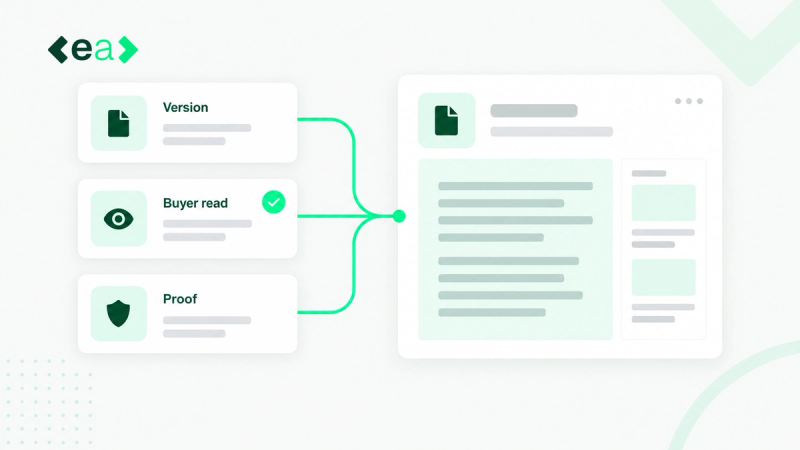
EA reads approved documents and answers with sources shown, so the answer carries the document it relies on and not a general reference. Autofill completes questionnaires from approved evidence with citations, which gives the reviewer the same pointer the author saw when drafting. Answers carry statuses and version history, so the team can see which version of the source the answer reflects. Comments let a reviewer note where a reference needs to be tightened before the answer goes out.
EA does not decide which clause best answers a question. That still takes a person who knows the material and the buyer's intent, and the reviewer's check is what confirms the pointer is right. What EA changes is the search: the source is already attached to the answer, so the person checking it does not have to find it again. Our article on how a tender question reaches the right specialist covers how to route questions so the person with the right knowledge checks the reference.
Precise references also make reviews faster. A reviewer who sees a clause number and a quoted sentence can confirm the answer in a minute. A reviewer who sees a title can spend twenty minutes finding the passage, and may still read it differently from the author. When an answer is reviewed, the review record should show which clause was checked, as well as the fact that the answer was approved. Our article on keeping a record of evidence reviews describes how to record that kind of check.
Keeping the pointer accurate
References break in the same way links do. A section number changes when a new clause is added, or a heading is renamed. A pointer that was correct at submission may point to the wrong text after a revision. Record the document version alongside the section, so the reference can be checked against the version the buyer received.
Check references when a document is revised. A quick search for the old section title, or for the clause number, shows which answers need updating.
Deciding how much of a document to point to
Not every document should be cut down to a clause. A contract, an audit report or a signed certificate often needs to be provided in full, because a buyer may need the whole context to rely on it. A policy, a governance handbook or a sustainability report is different, because the buyer usually wants one commitment within it. For those, a precise pointer and the supporting sentence are more useful than the full document.
A good rule is to attach the whole document where the buyer needs its authority, and to point to the section where the buyer needs a specific fact. Decide that when the answer is drafted, so the reviewer is not left to guess.
When a whole document is the right answer
Some buyers ask for the full document, and a pointer is not enough. A signed policy, an audit report or a certificate with its scope may need to go in full, because the buyer needs the document's authority as well as the wording. In those cases, attach the whole document, and still name the section that answers the question so the reviewer does not have to search for it.
Writing the pointer so a buyer can use it
A pointer is only useful if the buyer can follow it without asking. Name the document, the section number and the clause title, and put the page number in brackets where the document is paginated. If the buyer is reading on screen, a section number is usually enough; if they are reading a printed copy, the page number saves them a search.
Where the supporting sentence is short, quote it. A single quoted line beside the answer removes any doubt about which part of a long policy the team is relying on, and it gives the reviewer something concrete to check. Where the sentence is long, summarise it in the answer and point to the section for the full wording.
Practical habits for precise references
Ask every answer author to name the source section, as well as the document. Make it part of the drafting standard, so the habit is set before the bid begins.
Before submission, have a reviewer open three references at random and confirm each one supports the answer. That small sample catches the most common errors.
Where a buyer's question covers several documents, consider a short cover note that lists the references in the order the questions are asked. It saves the reviewer from building the map themselves.
Where this leaves your buyer experience
A buyer should be able to check your answer in one click. Pointing them to the exact section, with the version and the supporting sentence, respects their time and makes your answer easier to trust. EA helps by keeping the source attached to each answer, along with its status and version, so the precise reference is part of the record from the start.
Pick one answer in your next submission that cites a long document and replace the general reference with a section pointer. Note how long it takes a reviewer to check it. To see sources attached to answers in EA, open a sourced answer and review the citation.
Filed under RFPs, Tenders & Questionnaires, 23 November 2026All posts