
Process Documentation: Who Owns a Shared AI Skill?
A shared AI configuration can keep working for months after the person who built it has left, quietly drifting out of step with the business. This article explains why shared AI setups need a named owner and how to hand one over without losing its purpose.
By EA Team
Contents
- Why shared configurations drift
- Separating the author from the owner
- What the owner needs to know
- Handing over without losing the thread
- What a review cadence looks like
- When to retire a configuration
- How EA supports shared ownership
- Practical steps for a clean handover
- Where this leaves your shared set-ups
A specialist builds a configuration that tells an AI agent how to answer the sustainability questions in a particular customer's survey. It works well, and the team starts using it for every submission from that customer. Eight months later, the specialist moves to a different team. The customer's survey changes its scoring, a policy the skill cites has been replaced, and two of the instructions refer to a process that no longer exists. Nobody is sure who should update it, so it keeps running, and answers come out slightly wrong.
The configuration had a builder and no owner. The builder knows how the skill works. The owner is responsible for keeping it right, even when they wrote none of it.
This article covers why shared AI configurations drift, how to separate the author from the owner, what an owner needs to know, and how to hand one over and review it. The aim is that a shared set-up stays accurate after the person who built it moves on.
Why shared configurations drift
Shared AI configurations drift for the same reasons shared templates do. The people who use them assume someone is maintaining them. The person who built them assumes the team will flag problems. Each change in the business, such as a new policy, a revised certificate or a new customer requirement, changes what the skill should say, and nobody is assigned to notice.
The effect is gradual. A skill that was accurate in the spring may cite a superseded policy by the autumn. Because the output still reads well, the drift is hard to see. The people using it trust it more than they should, because it has always worked before.
Separating the author from the owner
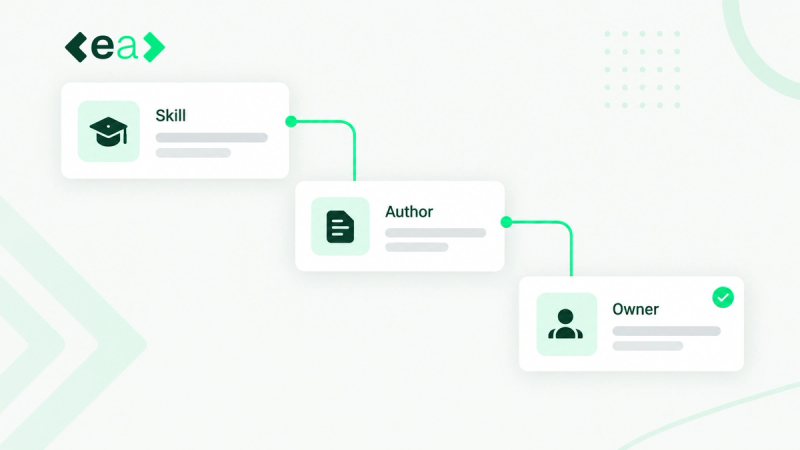
The author is the person who wrote the configuration. The owner is the person accountable for it now. These are often the same person at the start, and they need not stay that way. An owner needs enough knowledge to judge whether the skill still fits the work, and they need the authority to change it or to decide that it should be retired.
Naming an owner also helps the team decide who can change the skill. Without a named owner, anyone with access can edit it, and each edit is a small, unrecorded decision. With an owner, changes go through one person who can say why they were made.
What the owner needs to know
A good owner can answer a few basic questions. What is the skill for? Which documents does it rely on, and who approves those documents? Which customer, framework or process does it serve? When was it last checked against the current source material? Without those answers, a handover becomes guesswork.
The purpose should be written down in the skill itself, or in a short note stored with it. The purpose is the thing a new owner needs most, because it lets them judge whether a proposed change fits. A configuration with no clear purpose is hard to maintain, however well it was built.
Handing over without losing the thread
A handover works best when it happens before the author leaves. The outgoing author walks the new owner through the purpose, the sources and the known limits. They point out which parts were built for a specific customer and which are general. They record any open issues, such as a policy due for renewal or a customer question that has not yet been answered.
The new owner should then test the skill against a recent example, comparing the output with the approved answer or with the source document. That check confirms the owner understands what the skill is doing before they rely on it for live work.
What a review cadence looks like
A review cadence keeps an owner's attention on the configuration without turning it into a large project. A practical version has three checks. The first is a quick read of the purpose and the sources each quarter, to confirm both still apply. The second is a comparison of recent output with the approved answers, which catches drift before a buyer does. The third is a check at each change in the business: a new policy, a renewed certificate, a new customer requirement or a staff move.
Record the date of each check next to the configuration. A simple line such as "Reviewed against the current information-security policy, 3 September" tells the next person how fresh the set-up is, and it shows the owner that the review actually happened.
When to retire a configuration
Not every shared skill deserves a new owner. Some were built for a single customer relationship that has ended, and others have been replaced by a newer approach. An owner should be able to retire a configuration cleanly, which means removing it from the places where people find it, telling the teams who used it and pointing them to the replacement. Leaving a retired skill in place is a common cause of confusion, because someone will eventually find it and assume it is current.
How EA supports shared ownership
EA gives each piece of approved content a clear trail, which helps an owner keep shared configurations honest. Answers carry statuses, named approvers and version history, so the owner can see who approved a figure, when it changed and which version is current. EA reads approved documents and answers with sources shown, so the owner can check any answer against its source without reconstructing the reasoning from memory. These features leave the ownership decision to your team, and they make the owner's job tractable once the role is named.
Ownership of the configuration itself still needs to be recorded by your team, in whatever place you keep operational records. EA shows the trail for the answers, and your team decides who is accountable for the set-up that produces them.
Ownership also shows up in who approves a change. When a configuration's wording moves a figure or a commitment, the approver should be named on the answer it affects. Our article on how approval requests reach the right people explains how that routing works for requests that come in from outside the team.
Configurations that feed answers should be tested against the answers they produce. Our article on what tender response automation should actually automate sets out which parts of a response suit automation and which still need a person to check the result, which is the test an owner should apply after any change.
Practical steps for a clean handover
Start by listing the shared AI configurations your team uses regularly, and name an owner for each one. If you cannot name one, that is the first problem to solve.
Next, record the purpose, the sources and the review date for each one in a short note. Keep the note with the configuration so the next person sees it.
Finally, set a review point, such as after each major policy or certificate change, and at each staff move in the team. A short check at those points is far cheaper than discovering a stale configuration during a live bid.
Where this leaves your shared set-ups
A shared AI configuration is only as reliable as the attention it receives. Naming an owner, writing down its purpose and handing it over properly before an author moves on keeps it accurate and accountable. EA helps by keeping answers, approvals and sources visible, so the owner can check the work against the approved record.
List the shared AI set-ups your team relies on this month and name an owner for each one, with a review date. If shared AI set-ups are drifting because nobody owns them, book a demo with EA and bring one configuration, so we can show how approved answers carry their approvers, statuses and sources.
Filed under Compliance Knowledge & Evidence, 13 November 2026All posts
Keep reading