

For sustainability, regulation and security teams in energy and water
Your reporting year, drafted from evidence you already hold.
Your engineers run the plants and the networks. EA takes on the reporting: the sustainability statement under the Corporate Sustainability Reporting Directive (CSRD) or the climate disclosures in your annual report, the CDP response, and your Network and Information Systems (NIS) self-assessment. It drafts each from last cycle’s approved answers, asks your data owners for this year’s figures, and takes each to the director who approves it.
Try EA free. No card needed.

Organisations that run work on EA





The problem
Every report needs the people who run the network.
Operations holds the numbers
Emissions, water use and capital spend each come from a different corner of the business, and each cycle starts by finding the same owners again.
The reasoning left with the adviser
When a consultant drafted last year’s statement, the why behind each answer went with them. This year starts from their file, not from what your team agreed.
Four regimes, four calendars
CDP scores in September and the statement goes out with the annual report. The NIS self-assessment and the regulator’s returns fall due on dates of their own.
When the cycle opens, where does the time go: finding last year’s approved wording, getting this year’s figures out of operations, or getting the director to sign? EA does the first two, and the director signs with each figure’s source in view.
What EA does
Last year’s approvals become this year’s first draft.The cyber self-assessment, carried forward principle by principle.
The CSRD statement draws on every part of the business and goes to an assurance provider for limited assurance. Here it is in EA, from last year’s statement to the Chief Financial Officer’s approval.
Operators of essential services assess themselves against the National Cyber Security Centre’s Cyber Assessment Framework (CAF) under the Network and Information Systems (NIS) Regulations, and agree an improvement plan with the competent authority, such as Ofgem for gas and electricity. Here is the self-assessment in EA.
01 / 06
- EA
Runs the CSRD gap analysis on last year’s statement and this year’s material topics, and marks each disclosure requirement met, partly met or not met. Gap Analysis
Your teamThe Head of Sustainability confirms the material topics from the double materiality assessment.
- EA
Drafts each disclosure from last year’s approved statement, the transition plan, board papers and the carbon accountant’s method note, with the passage behind each paragraph beside it.
Your teamEach topic owner checks the paragraphs against their sources.
- EA
Marks 14 paragraphs “Needs evidence” where this year’s figure isn’t in yet, such as gross scope 1 emissions from the generation fleet, and groups them by the data owner who holds each one.
Your teamThe calculations stay with the data owners, who each get a short list.
- EA
Sends each owner one message, in Microsoft Teams or by email, with last year’s approved figure beside each question and the date it’s needed, and follows up until it’s answered.
Your teamOwners reply with the figure and where it came from; the Head of Sustainability sees who is still due.
- EA
Keeps each approval apart from later edits, and sends any paragraph changed after approval back to its approver.
Your teamTopic owners review their sections; the Chief Financial Officer approves the statement before it goes to the board.
- EA
Assembles the approved statement in your management report template, each figure linked to its source document at the page.
Your teamThe Head of Sustainability shares the evidence with the assurance provider by EA’s secure link.


01 / 04
- EA
Opens last year’s approved self-assessment and improvement plan, and flags each outcome whose evidence is past its review date.
Your teamThe Head of Operational Technology Security confirms the scope: the networks and control systems behind each essential service.
- EA
Drafts the narrative for each principle, from identity and access control to response and recovery planning, from your approved policies, test reports and last year’s answers.
Your teamEach principle’s owner checks the draft against what the plant and control systems really do.
- EA
Marks “Needs evidence” where a test or review has lapsed, such as an incident exercise more than a year old, and asks its owner for this year’s.
Your teamOwners reply in Teams or by email, decide which outcomes are achieved, and confirm the improvement plan items EA drafts for the rest.
- EA
Writes the approved self-assessment and improvement plan into the regulator’s template, each statement linked to its evidence.
Your teamThe Accountable Director approves it, and your team sends it to the competent authority.
See these stages on the disclosure your team is drafting now.Walk through one principle with us, from last year’s answer to this year’s evidence.
Book a demoWho it’s for
Each team’s part, drafted before it reaches them.
Head of Sustainability
On your desk
The sustainability statement, the CDP response and the ratings that read them.
With EA
See which owner each missing figure waits on, and answer CDP and the raters from the wording the statement already carries.
You decide
What is material, and what the business commits to.
Head of Regulation
On your desk
The regulator’s annual returns, its information requests and, for water companies, the annual performance report.
With EA
The narrative sections arrive drafted from the data the business has agreed and last year’s return, and you focus on what changed.
You decide
What the business tells its regulator, before the board confirms it.
Head of Operational Technology Security
On your desk
The NIS self-assessment, the improvement plan and customers’ security questionnaires.
With EA
The self-assessment comes back drafted, with each lapsed test sent to its owner.
You decide
Whether each outcome is achieved, and what goes in the improvement plan.
Head of Procurement
On your desk
Human rights checks on the supply chain, from solar panels to batteries, and the modern slavery statement.
With EA
Each category manager is asked only about their own suppliers, so the statement reflects this year’s checks without a round of meetings.
You decide
Which risks the business reports, and what it commits to.
Relevant EA features
What the business agrees, every report can use.
- Knowledge LibraryStatements, policies, past responses
 01
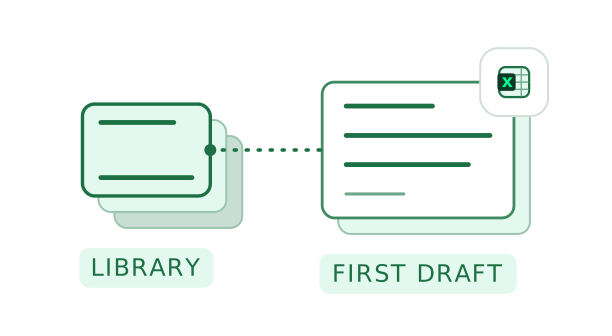
Agreed once, used for every framework
A figure or policy approved for the sustainability statement drafts the matching answers for CDP, the raters and customers’ questionnaires. If finance restates it, EA flags each answer that used it.
- EA AgentIn Teams, Slack or email
 02
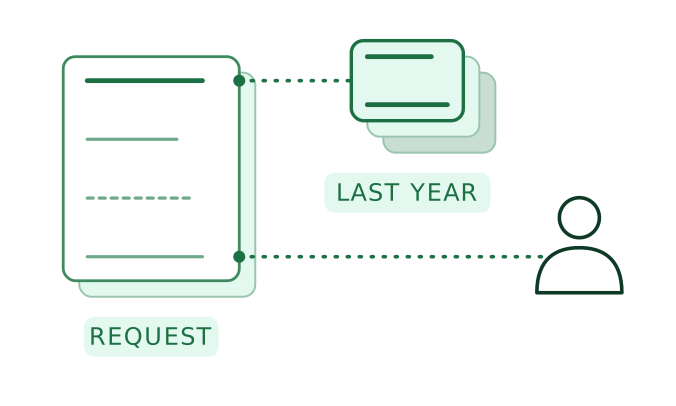
Information requests, straight to the engineer
When the regulator sends an information request between cycles, each question goes to the engineer or analyst who holds the figure, in Teams, Slack or email, and their reply is filed as the answer, credited to them.
- ApprovalsWho approved what, and when
 03
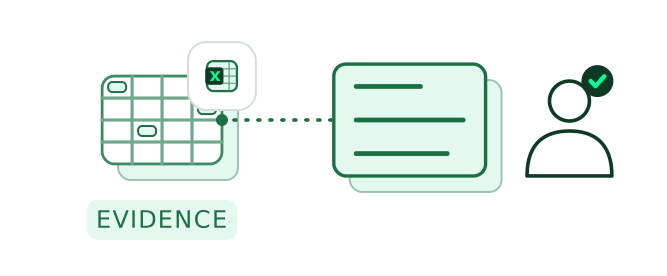
Each section signed by the person accountable
The assurance provider can trace any paragraph to who reviewed it, who approved it and the source they saw.
- ProjectsOwner, due date, approver
 04
Each deadline, owned and dated
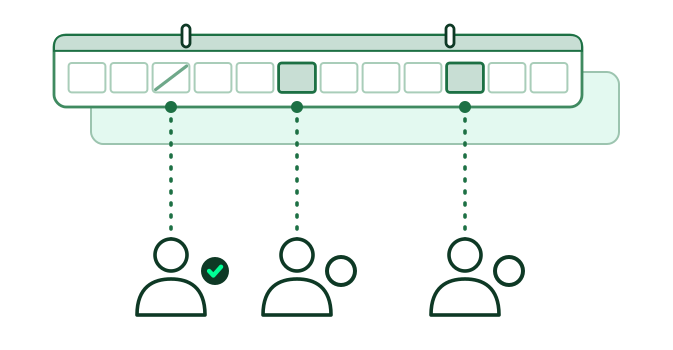
Each disclosure, return and self-assessment has an owner, a due date and an approver, and a weekly digest tells each team what falls due next. A closed disclosure becomes next year’s starting point.
Why EA for energy and utilities
The figures have a home. The reporting around them needs one.
| Compared with | What it does well | What EA adds |
|---|---|---|
| Doing it in-house by hand | Keeps the knowledge in the business, with last year’s workbook and a round of emails. | Holds the approved answers and every ask in one place, so next cycle starts from this one’s. |
| A CSRD adviser | Brings framework expertise and an outside view of materiality. | Leaves the materiality calls with the adviser while EA drafts each section and gathers the figures from operations, so the working file and its approvals are the business’s own next year. |
| Sustainability reporting software | Collects and calculates the figures, with their history. | Writes the narrative around those figures, and answers CDP and customers from the same text. |
| A general AI assistant | Summarises long documents and drafts paragraphs for one analyst. | Drafts from the figures the business has agreed, with the source beside each one, and asks the engineers for the ones still missing. |
EA’s own security
The questions your security team asks first.
- Hosted your way
EA’s cloud in a region you choose, hybrid options or on-premises. Data never used to train the models EA runs on.
- Access
Single sign-on, which you can enforce, and an access list for each workspace.
- Support access
EA staff see your data only in a time-limited window you open.
- Testing
An independent firm runs a penetration test on EA every year.
- Security contact
EA’s security team is at security@eaglobal.ai.

We’ll show your security team how operational technology evidence stays in a workspace only they can open.
Book a demoWhat you’ll hand EA
Every return, statement and self-assessment in your year.
Regulators, investors and customers ask for many of the same figures. Agree each one once.
Sustainability disclosure
- CSRD sustainability statementThe statement, from the gap analysis to the assurance provider.Each year, with the annual report

 CDPClimate and water security, from last year’s response.Each year; scored in September in 2026
- EU TaxonomyThe Taxonomy narrative beside the figures finance calculates.Each year, with the statement
Regulation
- Regulator’s annual returns and information requestsEach return’s commentary and each request’s answers, drafted from the figures the business has approved and taken to the Head of Regulation.Each year, and when the regulator asks
- The water annual performance reportIts narrative and the board’s assurance statements.Each year
Security and resilience
- NIS2 for EU operationsThe measures the NIS2 Directive asks of energy and water businesses in the EU.Kept current
- The NIS self-assessment and improvement planAgainst the Cyber Assessment Framework, for the competent authority.Each year
- Customers’ security questionnairesFrom the same evidence as the self-assessment.When a customer asks
Supply chain

 EcoVadisFor suppliers into the energy sector, and the rating your customers ask for.Each scorecard lasts 12 months
- Modern slavery and human rights due diligenceThe statement, and the human rights checks on suppliers behind it.A statement each financial year
- Carbon Border Adjustment Mechanism (CBAM) dataEmbedded emissions data when electricity or hydrogen goes into the EU.Definitive regime since 1 January 2026
Also handled
- Supplier qualification answersThe registration answers utility buyers ask their suppliers for.Kept current, with an annual audit
FAQ
What energy and water teams need to know.
Regulator-specific questions are best taken in the demo.
Each paragraph cites its source, opened at the page, and EA says where the evidence is missing. If a paragraph on biodiversity at a wind farm cites a site survey that has passed its review date, EA marks it “Needs evidence” and asks the survey’s owner for the current one.
Your data owners and systems, as now. EA drafts the disclosures around the figures they agree, and links each one to its source.
Keep them for the materiality assessment. EA drafts the statement and asks the data owners for their figures, and the Chief Financial Officer approves it. A wind-energy manufacturer completed its CSRD evidence in-house, on deadline, on EA.
Yes. Security evidence can sit in a workspace only the security team can open, and the self-assessment draws on it there. The sustainability team works in its own workspace, and a shared one holds the group policies both use.
Yes. Alongside the statement, CDP’s water security questions and the NIS self-assessment, EA drafts the annual performance report’s narrative and the board’s assurance statements from the year’s approved data, for the Head of Regulation to check before the board signs.
With whatever falls due next: last year’s statement, CDP response or self-assessment, uploaded as it is. EA reads from SharePoint, OneDrive and selected Google Drive files where your files already are, and our Customer Success team helps with exports from other platforms. Plans differ by the number of autofills, the workspaces you need and the size of your knowledge library; see the pricing page.


Your next report, from the figures you’ve agreed.
From your agreed figures to the Chief Financial Officer.