

Answer library
Reuse the answer. Trust that it’s still true.
EA keeps your approved answers and documents with their sources and an owner for each fact. When a certificate expires or a policy is replaced, it stops citing what rests on it and asks the owner to check. It also remembers how your organisation likes things done.
Try EA free. No card needed.

Organisations that run work on EA





How the Knowledge Library works
Each fact kept once, and kept current.
The same fact sits in dozens of past answers, and each copy ages on its own. Certificates lapse each year, policies are revised, figures are restated, and the person who wrote last year’s answer has moved on. So each new questionnaire means checking whether the old answer still holds, because nobody owns the fact, only copies of it. The unwritten rules age the same way: which figures finance must see, how long answers should run, what the company calls itself. They live in one person’s head and get explained again to each new colleague.
01
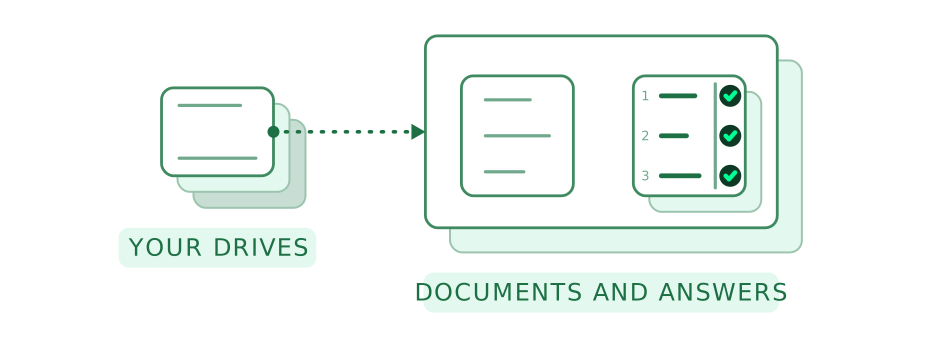
Documents and answers, side by side
Policies, certificates and reports on one side; answers you’ve approved before on the other. Upload files, folders or zipped folders, or connect SharePoint, OneDrive and selected Google Drive files and sync them on the schedule you set.
How EA connects to your storage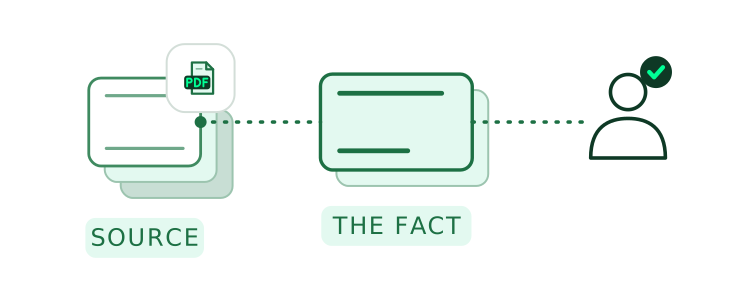
02
A source and an owner for each fact
Each fact your organisation states is held with its evidence, an owner and an approval, checked by one person and approved by another. Click any answer and its source opens at the page.
How approvals work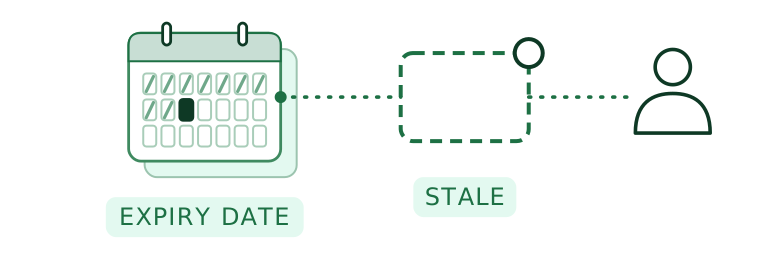
03
When the source lapses, the owner hears first
Documents carry an expiry date. When one expires or is replaced, EA stops citing it, marks the facts that rest on it stale, flags the answers that use them and asks the owner to check them again.
04
It remembers how you work
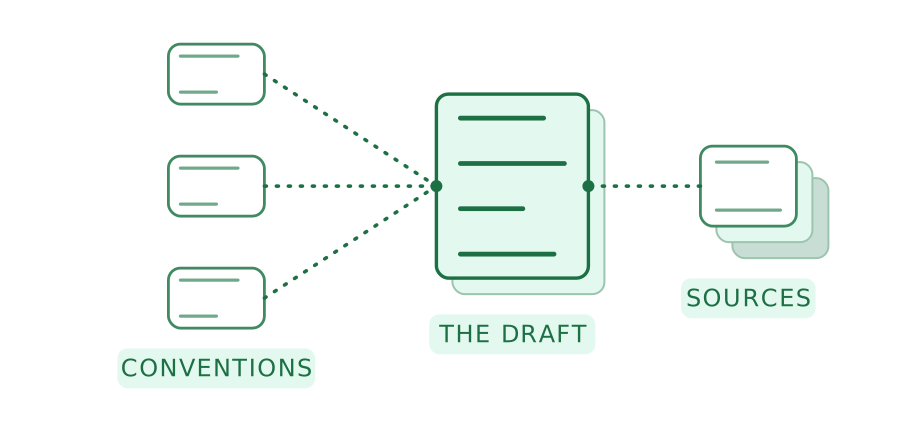
Tell EA a convention once, for the organisation, a workspace or yourself, such as “certification answers give the expiry date”, and it follows it from then on. Conventions shape how EA drafts and who it asks; the facts still come from your sources.
Worked example
The day a certificate runs out.
The company’s Cyber Essentials certificate reaches its expiry date while three pieces of work cite it: a customer’s security questionnaire in draft, a tender’s IT security section in review and a supplier registration form approved last month.
01 / 04
- EA
Stops citing the certificate on its expiry date and marks the fact that rests on it, “Cyber Essentials certified”, as stale.
Your teamIT, who owns the certificate, is asked to check it the same day.
- EA
Flags the three answers that cite the fact. The questionnaire answer in draft is marked “Needs evidence” until the fact is current again.
Your teamThe account manager sees which requests are affected before any of them goes back.
- EA
Files the renewed certificate against the fact with its new expiry date, and brings the updated wording for checking and approval. Approvals & sign off
Your teamIT checks the wording against the certificate, and the Information Security Manager approves version 2.
- EA
Points each flagged answer at version 2, so a redraft cites the renewed certificate. Autofill
Your teamEach reviewer redrafts and checks their answer; the supplier form, already approved, goes back to its approver.

See a fact go out of date and come back, in each request that cites it. For your IT team: each workspace keeps its own access, and data is hosted in EA’s cloud in a region you choose, hybrid or on-premises.
Book a demoWhat the Knowledge Library does
What it holds, and what it remembers.
What it holds
- Approved before it counts
Documents can go through named reviewers and an approver before EA uses them, and a replacement version keeps its history.
- The passage, not just the file
Search by meaning and by keyword finds the passage that answers the question, and spreadsheets keep their rows and columns.
- A trail back to the source
Trace an approved statement to the fact behind it, the excerpt it rests on and the file and version it came from, and see where else it’s cited.
How you use it
- Memory at three levels
For the organisation, “use the registered company name”; for one workspace, “answers to this customer stay under 150 words”; for you, “draft my replies without bullet points”. Each can carry an end date.
- Ask it what you’ve approved
Ask a question across your documents and approved answers in chat, get an answer with its citations, and save a good one to the library.
FAQ
Questions about knowledge and memory.
What knowledge owners, and teams that already keep an answer library, ask.
Give each fact an owner and tie it to the document it rests on, so the library moves when the document does. In EA, when your Cyber Essentials certificate passes its expiry date, the fact that cites it is marked stale and IT is asked to check it before the next questionnaire reuses it.
Expired documents drop out of what EA cites, and the answers that relied on them are flagged before they’re reused. If a tender asks for your current certifications and the stored certificate has expired, EA marks the answer “Needs evidence” and asks the certificate’s owner for the renewal.
A memory is a convention; an approved answer is a fact. EA follows a memory such as “round revenue to the nearest million” when it drafts, and the revenue figure itself comes from an approved answer or document, with its source beside it.
Keep them. Import the answers you’ve approved before and connect the folders where your documents sit, and EA drafts from both from the first request. Syncs run daily, weekly or monthly or by hand, and if a sync result is uncertain, EA keeps the existing copy rather than deleting it. If your library lives in questionnaire or proposal software, our Customer Success team helps with the export; EA and questionnaire software, compared.
It scales with how much you keep in it and how many teams draw on it. Plans differ by the number of autofills, the workspaces you need and the size of your knowledge library; see the pricing page.
The people you’ve given access to. Permissions are set by group and denied by default, documents can be restricted one by one, and each workspace keeps its own access. The security overview covers how the data is held.


Your next certificate renewal, without the hunt for what cites it.
One stale fact, renewed, to your Information Security Manager.
Related
The rest of EA draws on the library.
Other modules
- AgentFinds the approved answers a request needs and asks owners for what the library can’t cover.
- Gap AnalysisMatches each requirement of a framework against the facts and documents the library holds.
- AutofillFills the customer’s own file from the approved answers here, each with its source.
- Approvals & sign offEach answer approved there is kept here for the next request.
By industry
 SoftwareSecurity answers that cite certificates and policies with dates on them.
 ConsultingClient vendor due diligence answered from the firm’s approved facts, the same for each client.
 Construction and infrastructureScheme memberships and certificates that lapse on different dates through the year.
 Public sector and defenceSelection questionnaires that ask for current certifications and policies each time.