The risk in an AI tool depends less on the screen a team uses than on the chain of companies that process the text behind it. Find out who sits in that chain, what each one has agreed to, and write the answers down before the first client file is uploaded.
The rest of this article explains where the AI supply chain hides, how to map it into a short provider register, what a good answer contains, and where EA's position fits. It is worth reading because a register built once saves the scramble when a client asks.
Why the interface hides the supply chain
Picture a bid manager at a consultancy with a 40-page client brief and four days to respond. She pastes the sections she needs into an AI assistant and gets a usable draft within minutes. The tool works well, so the draft moves on to a colleague, then to a partner, and nobody asks where the text went along the way.
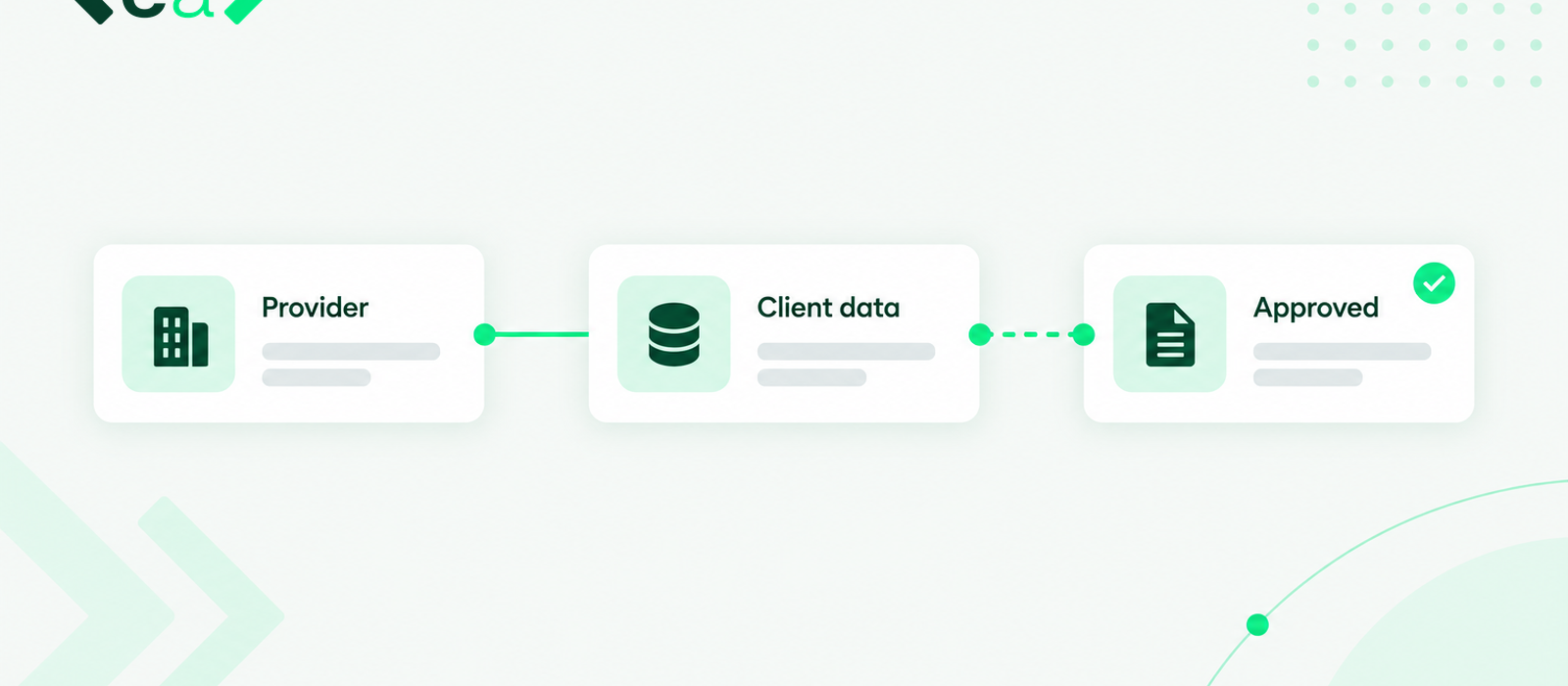
Most AI tools present one brand. Behind that brand, a model provider usually receives the text and generates the response. The platform may send requests through a gateway, and logs or storage may sit with yet another company. Each of those links can have its own retention period and its own terms. None of this is hidden out of bad intent. The front end is designed to be simple, so the supply chain sits out of view unless someone goes looking for it.
The result is a familiar pattern. A team approves a tool because it is easy to use, and a client's security reviewer later asks which AI providers processed their information. If nobody can answer, the conversation shifts from the quality of the work to the reliability of the team, and that is an expensive place to be during a tender.
Map the chain before the first upload
Start with a short register. For each AI tool your team uses, record the vendor, the model provider or providers behind it, the processing locations, and the retention position. Ask the vendor for a current list of sub-processors and model providers, and ask them to point you to the written terms that cover inputs, outputs and logs.
Three questions do most of the work:
- Does the provider keep inputs and outputs, and if so, for how long? - Are inputs used to train or fine-tune any model? - Who can access logs, and under what conditions?
Get the answers in writing and date them. Providers change their terms, and a verbal assurance from a sales call will not satisfy a client's audit.
What a good answer looks like
A good answer names the provider, states where the data is processed, gives the retention period, and says whether training takes place. It points to the document that says so. A weak answer says the tool is "secure" or "enterprise-grade" without naming a provider or a term.
Be specific about the scope of the answer, too. If your team uses one tool for drafting and another for research, the register should show both, because the risk in each is different. A client does not want a single reassuring sentence. They want to know which tool touched which information.
Where EA fits in that chain
EA does not run a proprietary model. It sends requests to third-party model providers, so the chain described above applies to EA as well. Before your team uploads client files, ask EA for its current list of model providers and the terms that apply to each, then file the answer in your register like any other tool.
Once a file is inside EA, the work stays tied to approved sources. Keeping an evidence record for each review shows how a simple log of evidence supports the same kind of checking. Autofill completes questionnaires from approved evidence and shows citations for each answer, so a reviewer can trace a sentence back to the document it came from. That traceability does not replace the provider check, but it makes it easier to show a client where each answer came from. For a wider view of how AI should sit within a bid process, read what should tender response automation actually automate. The steps that benefit most from automation are the ones where a source and an owner are already clear.
Make the check part of the workflow
A register only helps if people use it. Set one simple rule: no client file goes into a new AI tool until the provider is on the register and the terms are filed. Name an owner for the register, usually the information security lead or the head of bids.
Terms move, so the register needs a review rhythm rather than a one-off effort. Tie the review to the moments that matter most: a new tool being approved, a provider announcing a change, or a major client questionnaire arriving. A quarterly check catches the rest. A register that was accurate in March may be out of date by September.
Ask the questions your client will ask
Clients rarely ask about AI in the abstract. They ask a specific question in a specific place: a due diligence questionnaire from a buyer, a supplier onboarding form from a bank, or a security review that lands on the desk of the information security lead. Those questions tend to repeat, so the answers can be prepared once and reused.
The most common ones are which provider receives the text, whether the provider can retain inputs or outputs, whether any data is used to improve models, where processing takes place, and whether the firm can delete data on request. Write a short answer to each one, and attach the provider terms it relies on.
Where you cannot answer yet, record the gap on the register with an owner and a date. Clients treat a precise, dated gap as evidence of a working process. A confident answer that later turns out to be wrong damages the relationship far more than a measured one.
Keep the register in the bid pack
Store the register where bid coordinators already look, and link it from the pre-bid checklist. Put a one-paragraph summary at the top explaining the scope, the owner and the date of last review, because the person completing the questionnaire is often not the person who approved the tool.
Keep a copy with your due diligence pack, and note which tools were used on each bid. When a tender asks which AI providers touch the client's data, the coordinator can answer from the register in a minute, with the terms attached. If a client later asks whether a particular tool touched their material, the bid record answers that directly. A register that lives in one person's inbox fails the first time that person is on leave.
Conclusion
The question "which provider handles this?" is simple to ask and quick to answer once someone has done the groundwork. Clients will ask it, and so will the procurement teams you bid against. A team that can answer it on the first call shows that its client data is managed deliberately, and it spends its time on the work the client actually hired it to do.
If you want to see how EA's model provider position and citation trail would look inside your own bid process, book a demo with our team and bring a recent questionnaire that included AI questions.