
Subject Matter Expert Cover: Who Checks an AI Answer?
A technical answer drafted with AI can wait for days when the one person who can verify it is on leave. This article shows how to plan cover for verification, so answers keep moving and nothing goes out unchecked.
By EA Team
Contents
- Why the expert becomes a single point of failure
- Separating drafting from verifying
- Defining the scope of a delegate
- Recording who checked what
- How EA supports delegated cover
- Practical cover arrangements
- What the delegate records on each answer
- Deciding which answers can wait
- Where this leaves your technical sign-off
Imagine a cybersecurity questionnaire from a financial services client. Most answers are settled. Three questions ask about how encryption keys are rotated, how the backup restore test was run last quarter and whether a particular cloud region holds customer data. The security architect is the only person who knows the answers well enough to confirm them. She is on leave for two weeks, and the questionnaire is due on Thursday. The draft answers exist, but nobody on the team is confident enough to sign them off.
This is a predictable problem. Technical questions tend to sit with one or two people, and those people are also the ones whose calendars are fullest when a bid is live. A draft that is accurate but unverified is not ready to submit, and an unverified answer that is submitted anyway can cause problems long after the bid is closed.
This article covers why one expert becomes a single point of failure, how to separate drafting from verifying, how to define what a delegate can confirm, and how to record what they checked. The aim is that a technical answer keeps moving while the expert is away.
Why the expert becomes a single point of failure
Specialist knowledge often grows around a person. The security architect knows which encryption settings were changed last year and why. She knows the restore test was run in a staging environment and that the production run is scheduled for next month. None of that is written in one place, so when she is away, the answer looks right on paper but nobody can say whether it still is.
The team's response is usually to wait. That is sensible for a single answer, and across a full questionnaire it means the whole submission waits on one calendar. Delays of this kind are rarely caused by the work itself. They come from the gap between who drafts an answer and who can confirm it.
Separating drafting from verifying
Drafting and verifying are different tasks. A drafter can assemble an answer from approved material, cite the source and flag where the source is thin. A verifier checks that the answer is still true, that the evidence supports it and that nothing has changed since the source was written. The verifier needs to know the subject. The drafter needs to know where the material lives.
When these tasks are separated, the cover question becomes clearer. The drafter can keep working while the expert is away. What is needed is a delegate who can verify within a defined scope, and a record of what they checked.
Defining the scope of a delegate
A delegate should be asked to verify a defined area. Give them a short list of answers, or a defined area such as encryption, backup and data location, and state what they are confirming. For example, "Confirm the key-rotation answer matches the current key-management policy and the date of the last review" is a bounded task that a capable colleague can complete. "Sign off the security section" is not, because it hides how much judgement the expert normally applies.
Be honest about the limits too. If a delegate cannot confirm an answer, the right outcome is to mark it as unverified and hold it for the expert or a named alternative. An answer that is unverified and labelled as such is safer than one that looks confirmed.
Recording who checked what
Cover arrangements fail when the record is thin. Months later, a buyer asks why a particular answer was given, and the team cannot say who checked it or against which source. The fix is to note the verifier and the date on the answer, along with a short comment on what was confirmed. The note does not need to be long. It needs to show that the check happened and who did it.
How EA supports delegated cover
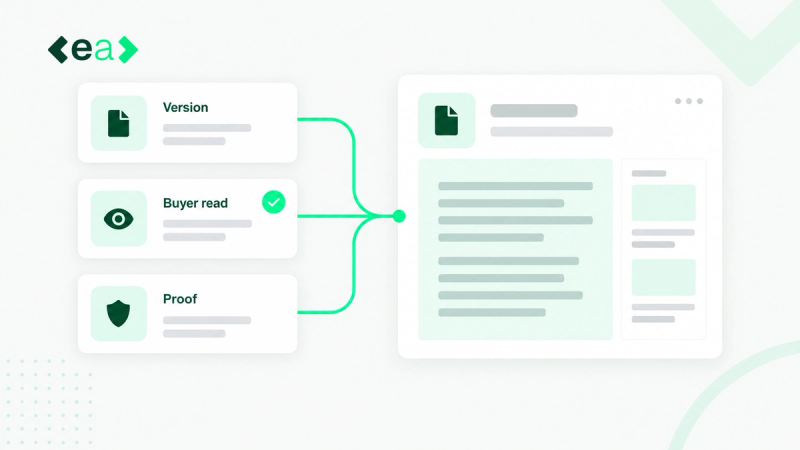
EA keeps verification visible on the answer itself. Each answer can carry named reviewers and approvers, so a delegate can be named for a specific set of questions. Reviewers can leave comments that record what they checked and what remains open. Answers carry statuses, which show whether a response is still in draft, under review or approved. Version history shows when an answer last changed, so the delegate can see whether the wording they are checking is the latest version.
EA's Autofill also completes questionnaires from approved evidence and shows citations, so a delegate can check each answer against the document it came from. For the technical questions above, that means the encryption answer points to the key-management policy and the restore answer points to the test record. That is what makes a short, bounded check realistic.
Our article on routing tender questions to a specialist explains how to send technical questions to the right person in the first place, which reduces how often a single expert becomes the bottleneck.
Approval routing for the delegate's sign-off should follow the same record. Our article on approval decisions across channels describes how decisions taken in email, Slack or Teams can be recorded against the answer they concern, so the expert sees the delegate's decision when they return.
Practical cover arrangements
Before the expert goes on leave, identify a delegate for each area of technical questions. Agree what the delegate can confirm and what must wait. Write the names into the questionnaire's review plan.
Walk the delegate through the source documents for their area. A twenty-minute session covering the policy, the latest test record and the known exceptions is often enough to let them check answers with confidence.
When the expert returns, ask them to review any answers the delegate held. It is a normal second check, the kind a careful team adds when an answer touches live risk.
What the delegate records on each answer
A delegate's check is only useful if the next person can see what it covered. For each answer they confirm, the record should show the delegate's name, the date, the version of the answer they checked and the source they checked it against. A comment such as "Confirmed against the key-management policy, version 3, reviewed in September. Rotation interval unchanged" is short, but it tells the expert on their return exactly what has been settled and what still needs their eye.
Answers they cannot confirm should be marked that way, with the specific gap written down. "Backup restore test date not in the evidence pack, awaiting the June test record" is far more useful than a blank or a vague note that the answer is pending. The expert can then pick up the open point without repeating the whole check.
Deciding which answers can wait
Some technical answers can be confirmed without the expert before submission. Some are factual and stable, such as a certification number or a supported standard, and a delegate can confirm them from the source document. Others depend on a judgement about current practice, such as whether a recent incident changed how the team handles a control. Those should be held. Agreeing this split before the leave period starts stops the delegate from either overreaching or stalling on work they could safely complete.
Where this leaves your technical sign-off
A technical answer should not wait for one person's calendar. Naming a delegate, defining what they can confirm and recording who checked each answer keeps the submission moving and the verification honest. EA helps by holding the reviewer, the status, the comment and the source together on each answer, so cover can be arranged without losing track of what has been checked.
Before your next expert leave period, list the technical questions that depend on one person and name a delegate for each area. If technical sign-off is blocking your submissions whenever an expert is away, book a demo with EA and bring one questionnaire, so we can show how named reviewers, comments and statuses sit on a technical answer.
Filed under RFPs, Tenders & Questionnaires, 16 November 2026All posts