If you have ever completed an EcoVadis assessment, you'll know that the hardest part isn't always answering the questions, but proving your answers.
Most organisations already have sustainability policies, governance processes and responsible business practices in place, but the challenge comes when demonstrating them effectively. Finding the right documentation, checking it remains current and ensuring it clearly supports each response can be a significant and time-intensive task, particularly when evidence is spread across departments, buried in shared drives or stored in individual inboxes.
Those that receive higher scores are not necessarily doing more than those with lower scores, but they may be better prepared to demonstrate the work they are already doing. That's why, for most organisations, EcoVadis scorecard improvement isn't about creating new policies, but making existing policies, actions and results easy to evidence.
What EcoVadis Assesses
To understand why evidence plays such an important role in an EcoVadis assessment, it helps to understand what the assessment is designed to measure.
EcoVadis evaluates organisations across four key themes:
- Environment
- Labour & Human Rights
- Ethics
- Sustainable Procurement
The questions that organisations receive are based on these themes and are tailored to factors such as company size, industry, and country of operation.
However, EcoVadis is not simply assessing whether an organisation has sustainability commitments in place. According to its methodology, it evaluates the quality of a company’s sustainability management system through three management indicators: Policies, Actions, and Results.
In practice, this means that organisations are expected to do more than simply state that a policy or initiative exists. Their submission should provide evidence that supports the policies they have in place, the actions they have taken, and, where applicable, the results they have achieved.
This is why supporting documentation is fundamental to the assessment. Without relevant and up-to-date evidence, it becomes much harder to demonstrate the quality and maturity of an organisation’s sustainability management system.
Why Good Companies Still Get Average Scores
Although EcoVadis provides a clear framework for what it assesses, many organisations still receive lower scores than they expect.
One of the most common difficulties is that supporting documentation is rarely managed in a single location or owned by one team. As a result, when an assessment begins, valuable time is spent searching across different systems and departments to identify the correct evidence. Even when documentation can be found, organisations must ensure that it remains current and relevant. Policies change, certifications expire and supporting documents can quickly become outdated, meaning evidence that was previously suitable may no longer accurately reflect current practices. Without a clear process for managing evidence, teams can spend significant time checking versions, confirming ownership, and ensuring the information they submit accurately reflects their current practices.
Therefore, when up-to-date and relevant documentation is difficult to identify or access, organisations may be unable to demonstrate the full extent of their sustainability practices.
The Implications of a Weak EcoVadis Scorecard
A weaker-than-expected EcoVadis scorecard can have implications beyond the assessment itself.
According to EcoVadis, many requesting companies use sustainability scorecards as a part of supplier qualification, procurement processes, and annual supplier reviews. In some cases, an EcoVadis score may be considered as part of a proposal for new business or used to assess potential business risk. Those with lower scores may also be asked to undertake a corrective action plan.
This means that a score that does not accurately reflect an organisation's sustainability management system could have wider commercial implications. If relevant evidence is missing or hard to locate during an assessment, organisations can miss opportunities to demonstrate the full extent of their sustainability practices.
How to Build an Evidence-Ready EcoVadis Submission
If you’re looking for EcoVadis submission help, the most effective approach is to make evidence management part of your ongoing processes rather than something to be tackled when assessment time arrives.
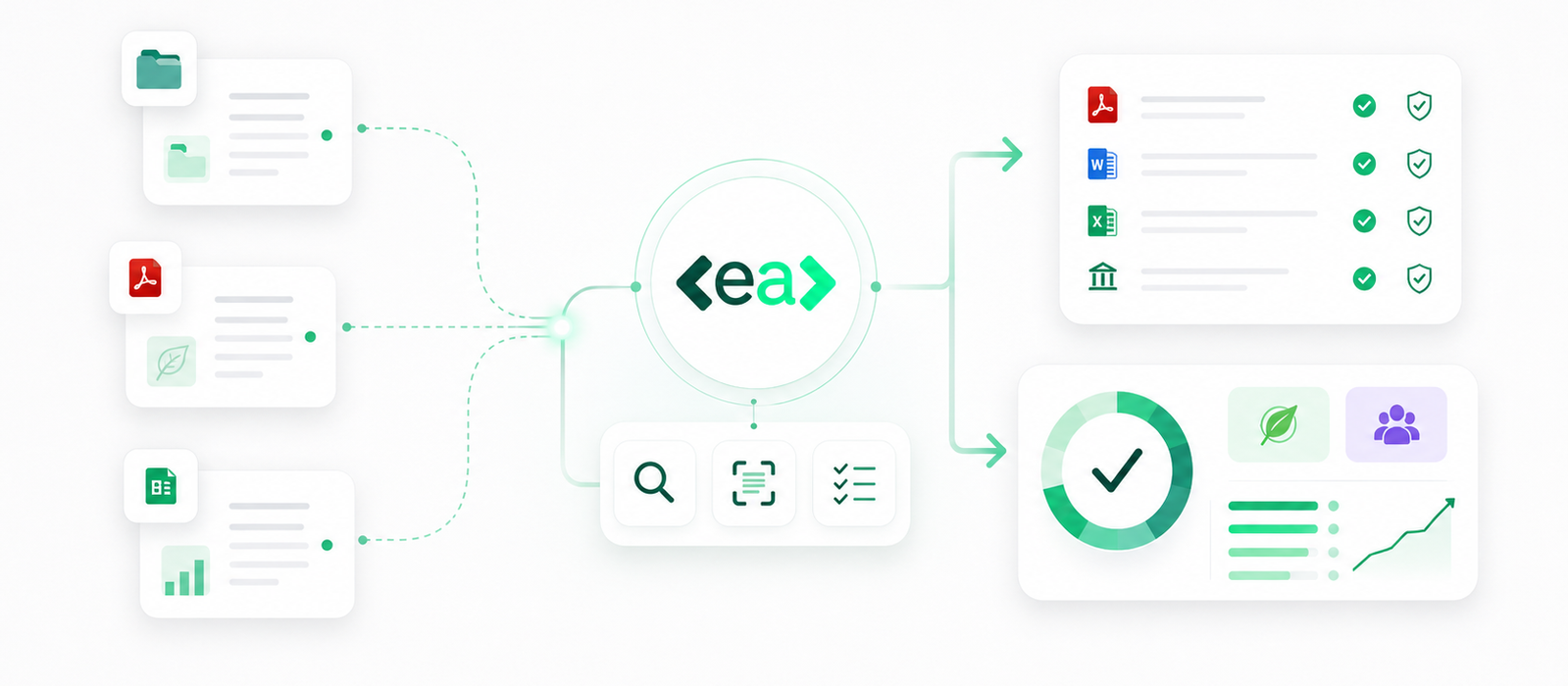
One of the most effective ways to do this is by mapping supporting documentation to the relevant assessment criteria as it is created or updated. Instead of searching for policies, reports and certifications each time a new assessment begins, organisations can build a structured evidence library that makes relevant documentation easier to find and reuse.
Keeping that evidence current is equally important. Policies should be reviewed regularly, certifications tracked and supporting documentation updated as practices evolve. This helps ensure that when evidence is needed, it reflects the organisation's most up-to-date sustainability management system.
Finally, maintaining a single source of truth for sustainability evidence can significantly reduce the time spent preparing submissions. When approved documentation is stored in one place, organisations can respond more efficiently, maintain consistency across assessments and reduce the risk of relying on outdated or incomplete information.
Rather than treating each EcoVadis assessment as a standalone project, organisations that invest in structured evidence management are better placed to demonstrate the work they are already doing, not only for EcoVadis, but across supplier questionnaires, customer due diligence requests and other sustainability reporting requirements.
EA was built around this approach, helping organisations build a knowledge base of supporting evidence, maintain trusted information and reuse approved documentation across assessments, reducing the time spent searching for evidence and increasing confidence in every submission.
If you’re preparing for your next EcoVadis assessment and want to improve your EcoVadis score, book a demo to see how EA can help, or try it free and start building an evidence-ready submission today.