Many organisations assume that improving their CDP score means collecting better sustainability data for their submission, but in reality that is not always where marks are lost.
More often, the difficulty is in understanding exactly what CDP is asking, how responses are assessed, and how existing information should be presented to align with the framework they have set up.
If you’ve ever opened the CDP questionnaire alongside the scoring guidance in hope of making sense of this, you’ll know that interpreting the requirements can very quickly become time-consuming. The information that you need is there, but understanding how it applies to your organisation is not easy.
This is why organisations with similar sustainability data can achieve very different scores. In other words, the answer to why your CDP score is lower than expected is within the way your organisation answered the questions.
What is CDP Reporting?
Before explaining why this happens, it's worth briefly explaining what CDP reporting is.
CDP reporting is the process of disclosing environmental information through CDP's global disclosure system. Organisations report information on areas such as climate change, water security, and forests, providing investors, customers, and other stakeholders with greater transparency around their environmental performance.
To help organisations prepare their submissions, CDP publishes questionnaire guidance, scoring methodologies and supporting documentation explaining how responses are assessed.
Interpreting the CDP Framework
Although most organisations have the information needed to complete their CDP submission, understanding how this maps to CDP’s assessment criteria is a separate challenge.
Rather than simply asking organisations to upload sustainability data, CDP evaluates how organisations understand and manage environmental issues through four progressive scoring levels:
- Disclosure - Providing complete and relevant information.
- Awareness - Demonstrating an understanding of environmental impacts and risks.
- Management - Showing that policies, governance and actions are in place.
- Leadership - Demonstrating environmental best practice through the highest scoring responses.
At first, those four levels appear straightforward, but in practice, understanding what they mean for your organisation and how to evidence them throughout your submission is often where the real work begins.
Why Organisations Lose Marks on Their CDP Score
Organisations can have strong governance, well-defined policies, and ambitious environmental programmes, but if they are not presented in a way that aligns with CDP’s assessment criteria, their score can be negatively impacted.
When relevant information lives in previous submissions, internal policies, and across teams, it is not always obvious that existing evidence could strengthen a response. This leads to confusion on why a score was lower than expected, with no understanding on how to resolve this in future submissions.
Better Interpretation Leads to Better Scores
Understanding what CDP questions are really asking is the first step to producing a higher score.
In other words, the better that you understand how CDP assesses responses, the easier it is to identify gaps, strengthen evidence, and improve the quality of your disclosure before submission.
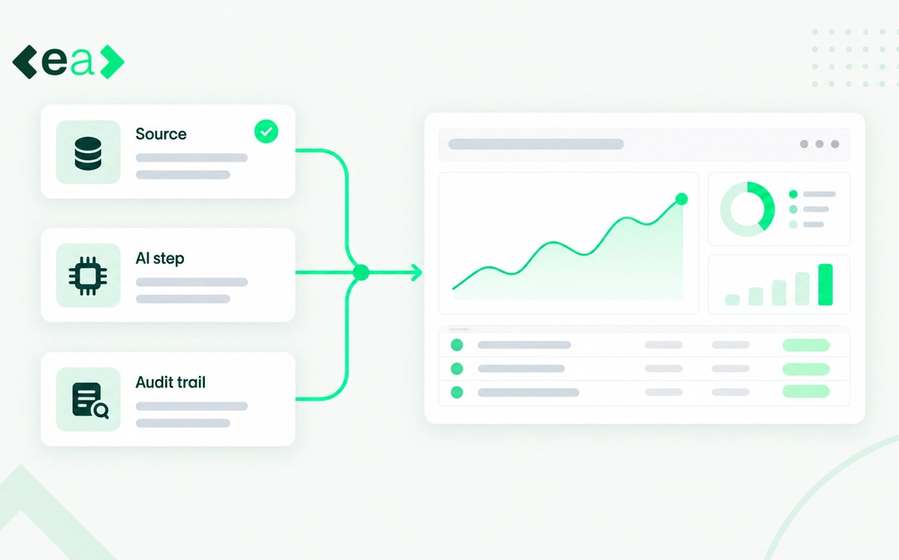
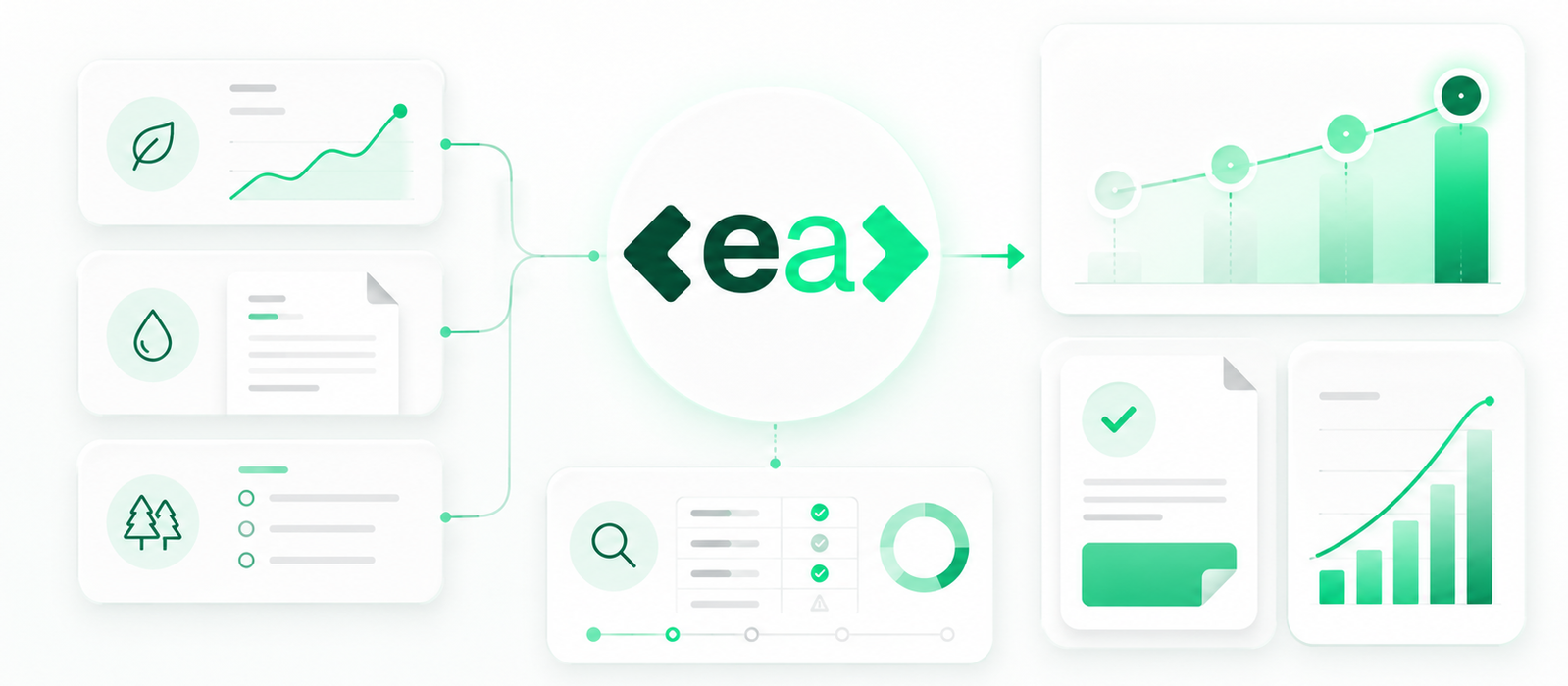
This is where EA was designed to help. Rather than expecting teams to interpret complex guidance documents alone, EA analyses your responses against CDP's framework and provides practical scoring guidance tailored to your submission.
EA’s gap analysis highlights where marks may be lost, identifies opportunities to strengthen responses, and recommends improvements before submission. Instead of spending hours interpreting guidance, your team can focus on implementing meaningful improvements with confidence.
With a faster reporting process and more consistent responses, a clearer path towards a stronger CDP score becomes far more achievable.
Final Thoughts
Successful CDP reporting depends on much more than sustainability data.
While accurate environmental information is essential, understanding how that information aligns with CDP's framework is often what separates average submissions from outstanding ones.
The organisations that achieve the strongest scores aren't necessarily those with the most sustainability data, but the ones that understand how to present it in a way that meets the framework, demonstrates their progress and makes every response count.
Want to see how EA’s AI software can help with your CDP submission? Book a demo or try it free now.