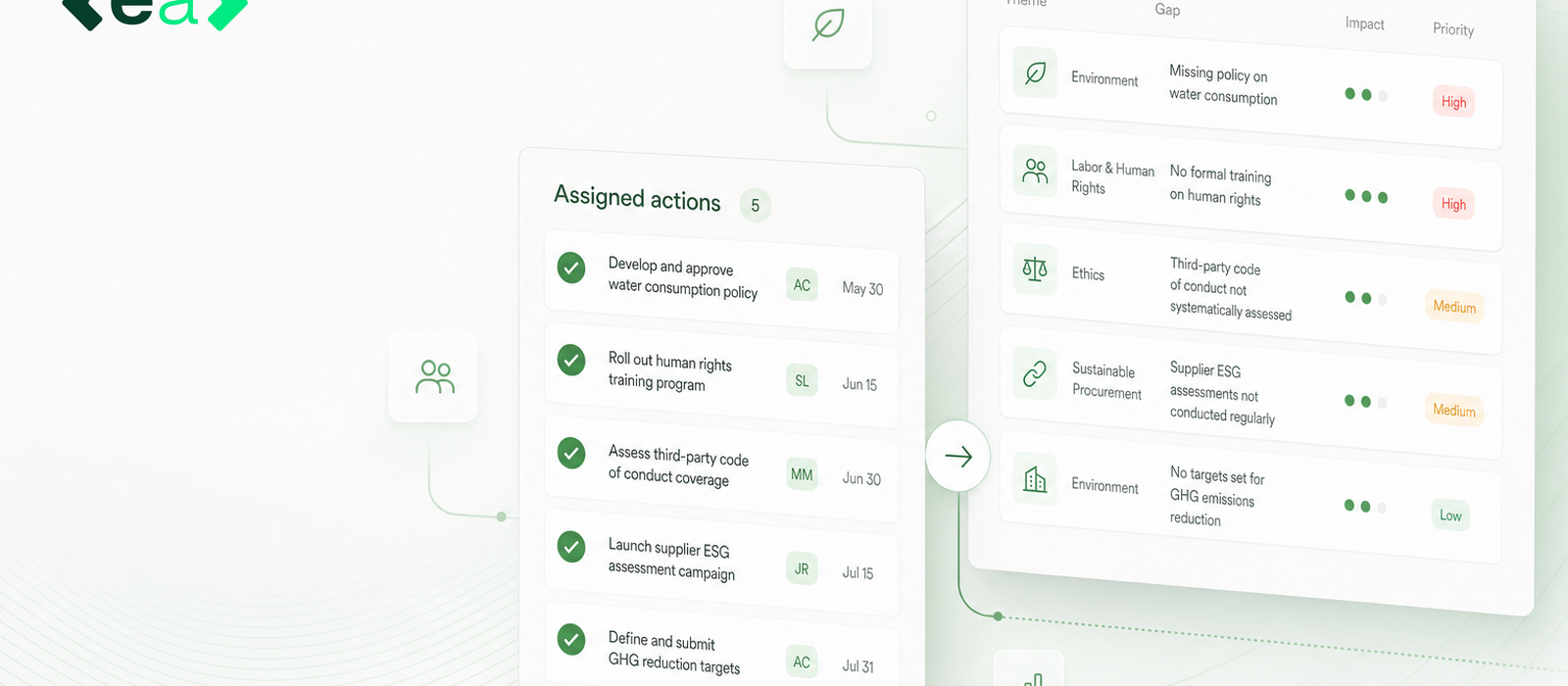
An EcoVadis scorecard arrives after a long stretch of evidence gathering. Filing it and noting the medal leaves the organisation in the same place next year. A low theme score, a missing policy or a weak indicator is a prompt to assign someone, attach a document and set a date.
This article covers how EA turns those insights into work: naming an owner before rewriting an answer, pointing the action at evidence rather than wording, keeping the action attached to the EcoVadis theme, and reviewing progress before the next cycle opens. That is valuable because the next questionnaire can start from completed files instead of the same gaps.
EA prepares the map of what was thin. People still own the actions and decide what is ready to submit. EA does not award a medal, guarantee a score or replace EcoVadis.
Name the owner before you rewrite the answer
Scorecard comments often describe a missing policy, incomplete reporting or limited coverage of a theme such as sustainable procurement. Rewriting the questionnaire cell without an owner usually produces the same gap a year later.
The first useful step is the person who can close it. A human-rights indicator may belong with HR. An emissions question may belong with operations. An ethics policy may belong with legal. The scorecard theme is the map; the internal role is the assignment.
Once that name is visible, the team can drop a general “we should improve EcoVadis” task. The work has a place.
Point the action at a document, not a better sentence
EcoVadis assesses policies, actions and reporting. A stronger paragraph does not replace a missing file. The assigned action should state the evidence required: a dated policy, a training record, a supplier code, a performance metric.
Follow-up then becomes concrete. The owner can upload a file, confirm a review date or record that the document does not yet exist. The sustainability lead can see which items are blocked by missing evidence rather than missing attention.
EA’s EcoVadis questionnaire workflow connects answers with supporting documents. Turning scorecard gaps into actions uses the same pairing in the other direction: the scorecard names the hole, and the team attaches the file that should fill it.
Keep the action on the theme it came from
A spreadsheet of improvements can drift away from the original scorecard. Six months later, nobody is sure whether an action was meant to lift Environment or Ethics. Keeping the theme, the indicator and the action together preserves that link.
It also helps when several gaps share a cause. One outdated code of conduct may affect more than one criterion. If actions stay on the scorecard structure, the team can close related items with a single document update.
Read Understanding EcoVadis Scorecard: 2025 Update for medals and theme scores. Assignment is how that reading becomes operational work.
Review the list before the next questionnaire opens
Actions only change the next assessment if someone checks them. A monthly or quarterly pass over open scorecard actions is more useful than a scramble when the new file arrives. The review can ask whether the evidence exists, whether it is current, and whether the questionnaire wording still matches the document.
Closed actions should remain visible. They become the record of what improved, which helps leadership reporting and the next evidence pack.
What this is worth to the team
Handled this way, EA does three things a filed PDF and a side spreadsheet will not:
- It turns the scorecard into a work list. Each gap can be assigned instead of sitting as a medal comment.
- It makes the action specific. The owner, the evidence required and the EcoVadis theme sit together, so follow-up is not a rewritten sentence with no file behind it.
- It leaves judgement with people. EA does not score, certify or submit. Open, blocked and completed items stay visible so the next cycle starts from work that was actually done.
When you assess any EcoVadis scorecard-to-action workflow, those are the tests: can each gap be assigned; does the action specify evidence, not only wording; do actions stay linked to the theme; can the team see open, blocked and completed items; and is there a review date that brings the work back into view?
The next submission is easier when the gaps already have owners and files.
Would you like to see how EA supports EcoVadis evidence and review? Book a demo or try EA for free.