EcoVadis submissions often fail in ways teams are not prepared for. The policy exists, but nobody knows who last updated it. The training record sits in a shared drive with no review date. The scorecard then treats the file as weak or outdated, even though the organisation believes the control is in place.
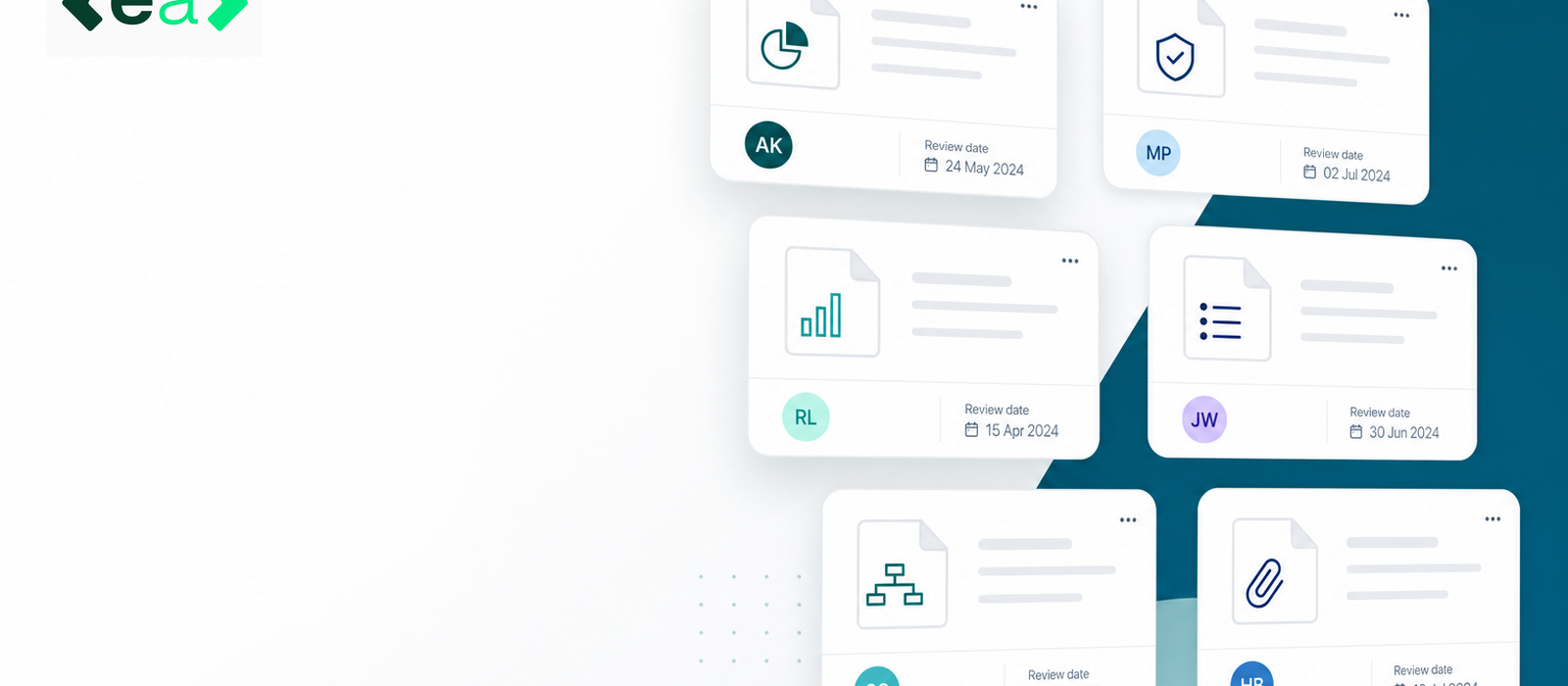
This article covers how EA keeps that library usable: naming an owner who can confirm the file, putting a review date on it so last year’s pack is not reused by habit, showing current / due / expired status with the document, and leaving a short history when a version is replaced. That is valuable because the next EcoVadis scorecard can be assembled from files that still have a person and a date attached.
EA can find and attach supporting evidence. People still confirm it is current. EA does not award a medal, guarantee a score or replace EcoVadis.
Ownership answers who can confirm the file
When a questionnaire asks for a health-and-safety policy, the first practical question is who can say it is still in force. If the answer is “sustainability will find it”, the file is already at risk.
An owner is the person who can approve a change, confirm that the document still applies, or say that it should be withdrawn. HR, legal, procurement, operations and finance will each own different items. The sustainability lead can coordinate the assessment without pretending to own every policy.
A named role on the file is also easier to reassign when someone leaves than a folder of anonymous PDFs.
Review dates stop last year’s pack being reused by habit
Many EcoVadis documents are still useful a year later. Some are not. A 2023 emissions figure, an expired ISO certificate or a supplier code that predates a new law should not be uploaded on autopilot.
A review date creates a prompt before the next cycle. The owner can confirm the file, replace it, or record that a new version is in progress. The sustainability team can see which evidence is approaching its date and plan the work.
EA’s EcoVadis questionnaire workflow is built to gather supporting evidence with draft answers. Owners and review dates make that evidence safer to reuse: the system can find the file; people still confirm it is current.
Status should sit on the file, not in an inbox
A large evidence set needs a simple view: current, due for review, expired, missing owner. That is more useful than opening each PDF, and it supports internal audit because the team can show that documents are maintained rather than assembled in a rush.
If the review reminder is a calendar invite with no link to the document, the update may never be saved back to the library. Status belongs with the file.
Read Understanding EcoVadis Scorecard: 2025 Update for how EcoVadis reads policies and reporting. Current, owned files are what that reading depends on.
Replacements should leave a short history
When a policy is replaced, the library should keep the previous version and the reason for the change. That helps the next assessment, and it helps if an analyst asks why a document date moved.
The history does not need to be elaborate. Owner, date, version and a one-line note are enough for most files. The point is that the current document is not an orphan.
What this is worth to the team
Handled this way, EA does three things a shared drive of unnamed PDFs will not:
- It makes every key file attributable. A named owner can confirm, update or withdraw the document.
- It makes currency visible. Review dates and a current / due / expired view sit with the file, so expired evidence is harder to reuse by habit.
- It leaves judgement with people. EA finds and attaches evidence; it does not certify that a file is still valid or submit the scorecard.
When you assess EcoVadis evidence maintenance, those are the tests: does every key file have a named owner; is there a review date; can the team see current, due and expired evidence in one place; are replacements stored with a short history; and can questionnaire answers point at the current file rather than a copy in someone’s downloads?
Owned documents make the scorecard easier to defend.
Would you like to see how EA connects EcoVadis answers to supporting evidence? Book a demo or try EA for free.